
Beijing's Backdoor into American Strategic Industries
Enough is enough

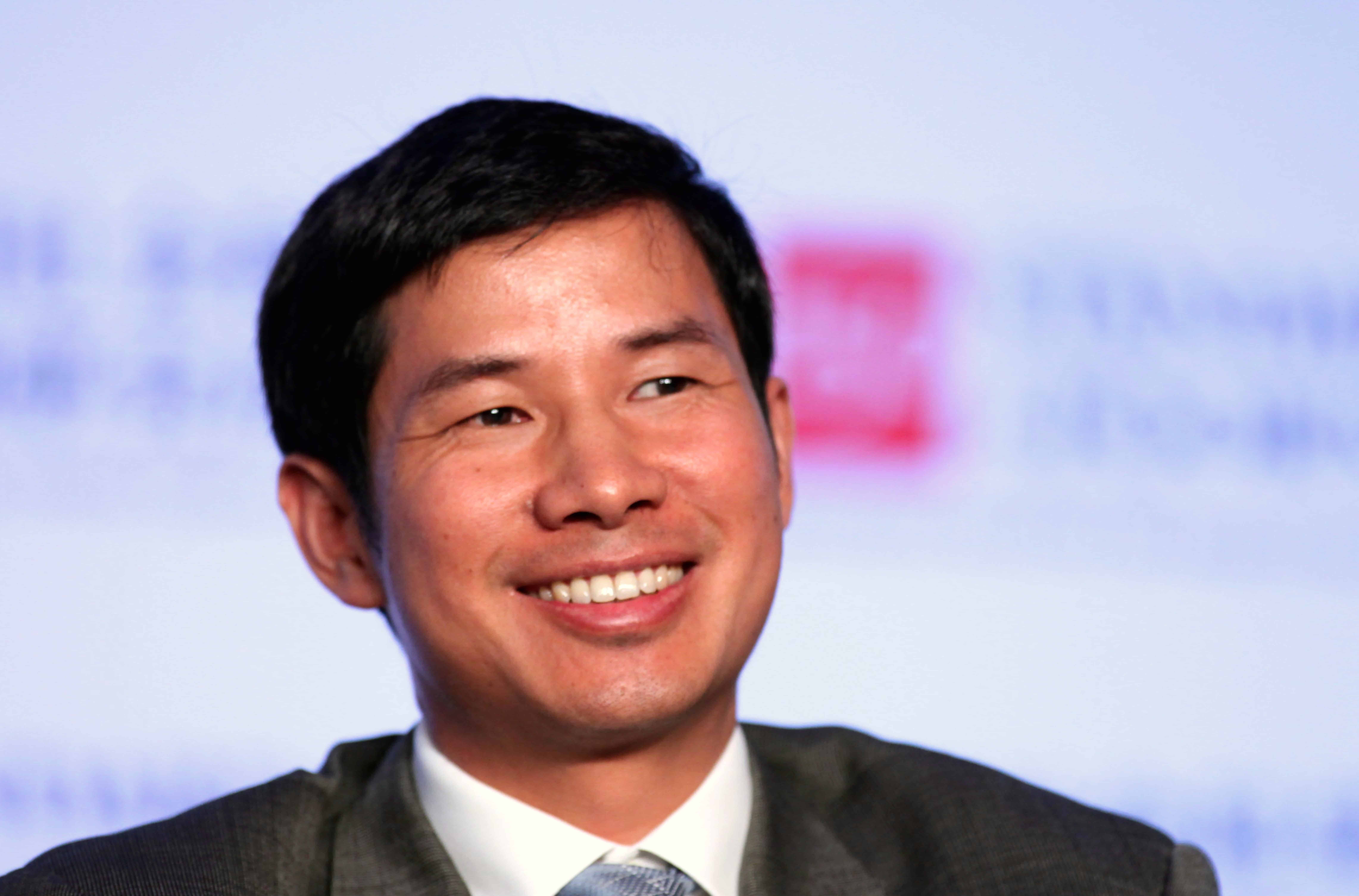
Primavera presents itself as a global investment firm. In reality, the firm and its founder function as access agents for Chinese state capital and the Chinese Communist Party’s United Front.
Primavera Capital Group is a $17 billion Hong Kong investment firm whose venture arm buys into American strategic technology. Primavera does not advertise who funds these investments. Primavera Venture’s limited partners include a Beijing municipal funds, a Changzhou district state-capital platform, and the private equity arm of a brokerage controlled by China’s sovereign wealth fund.
Primavera’s founder, Fred Hu, spent fifteen years as a member of the Chinese People’s Political Consultative Conference (CPPCC), the Chinese Communist Party’s premier united front organ, while occupying advisory seats at Harvard, Columbia, and the Council on Foreign Relations. Hu did this all while taking money from American pension funds. In addition to this, Primavera co-invests with sanctioned entities like CloudWalk Technology, and it operates over 200 schools across the United States, including early childhood education centers and K–12 private schools.
The US government must close these channels or keep underwriting its own defeat.
What We Know
Primavera’s LPs include the Beijing Science and Technology Innovation Fund and Jiangsu Guojing Private Equity Management, both Chinese state-owned economic development agencies with innovation mandates.
Primavera’s US portfolio includes Adden Energy, which holds an exclusive Harvard license to solid-state battery technology; Accutar Biotechnology, an AI drug-discovery company in Brooklyn; Xbiome, an AI biotech with operations in Cambridge, Massachusetts; ZAP Surgical, a robotic radiosurgery maker; and Navier, a San Francisco electric hydrofoil builder with a defense program. Primavera’s own release describes this investing as “support[ing] independent innovation aligned with national policies.”
Primavera’s portfolio has already moved an American asset to China. Primavera led Xbiome’s Series B in December 2020; announcing it, the firm’s venture co-head said Xbiome “will represent China in the microbial pharmaceutical field.” Sixteen months later, Xbiome acquired a clinical-stage drug program from Assembly Biosciences, an American biotech. That program now sits in a Shenzhen-headquartered company.
Primavera co-invests with CloudWalk Technology, a sanctioned Chinese AI company, and funds Chinese strategic-sector companies such as Gongji Technology, a Tsinghua-founded computing-infrastructure startup.
Fred Hu, Primavera’s founder and controlling owner, spent fifteen years in the CPPCC while holding advisory roles at Harvard and Columbia. (To this day he continues to serve on the advisory boards of Harvard and Columbia.)
Beijing Science and Technology Innovation Fund is a RMB 30 billion fund of the Beijing municipal government.
Jiangsu Guojing is controlled by the state-owned assets company of Wujin District, Changzhou. In January 2023, Primavera registered a $100 million fund in that same district, capitalized from its Cayman master fund, with a mandate of AI, intelligent manufacturing, and next-generation IT.
CICC Capital, another Primavera LP, is the private equity arm of CICC, whose largest shareholder is Central Huijin, a subsidiary of China Investment Corporation, China’s sovereign wealth fund.
SEC filings show Primavera Venture Partners Fund I is a Cayman Islands partnership holding $325 million, roughly 20% of it American money, owned through Primavera Holdings Limited by Fred Hu. The same ownership chain controls Primavera’s $17 billion private equity business.
Who Is Fred Hu
Fred Hu founded Primavera in 2010 after retiring as Goldman Sachs’ Greater China chairman. He has been an independent director of ICBC (2019–2025), a director of Ant Group during its aborted IPO (2020–2022), a board member of HKEX (2014–2021), and currently sits on the boards of UBS and Chubb and chairs Yum China. His bios state he “has advised the Chinese government on financial reform, SOE restructuring, and macroeconomic policies.”
What most public bios fail to mention: Hu spent fifteen years inside the united front system. He was elected to the Hunan Provincial Committee of the Chinese People’s Political Consultative Conference, the CCP’s premier united-front organ, in 2008, renewed for the 11th session in 2013, and seated on the 12th session roster in January 2018 in the economic sector (经济界), serving until 2023. The provincial CPPCC’s own pages record his proposals, the praise of its Hong Kong, Macao, Taiwan, Overseas Chinese and Foreign Affairs Committee staff for Fred’s diligence (these are all United Front organizations), and his own account of the role: “the role I play is a tie linking China and the world.” He also holds a standing profile on the Understanding China (读懂中国) conference site of the China Institute for Innovation and Development Strategy, an organization co-founded by the former executive vice president of the Central Party School and staffed by veterans of Ministry of State Security influence operations.
US establishments, meanwhile, have gladly installed him at multiple institutions, including Columbia Business School’s Chazen Institute advisory board, the Harvard Kennedy School Dean’s Leadership Council, and the Council on Foreign Relations Global Board of Advisors.
He uses those platforms to set the narrative inside the United States, and the message is consistent: economic separation from China is folly, and Beijing’s conduct is benign. He was the featured voice arguing yes in Goldman Sachs’ “Is China Investable?” report of September 2021. At the Fortune Global Forum in New York in November 2024 he framed tariffs as American self-harm. In July 2026 he was on CNBC warning against the US conducting a “financial war” against China. A fifteen-year CPPCC veteran with Chinese state entities among his limited partners is, from the most credentialed stages in America, telling Americans what to think about Chinese capital.
While he sets the narrative, American retirement money flows through his funds. Primavera’s dollar funds have fifteen limited partners, thirteen of them American, including the New York State Teachers’ Retirement System and the GE Pension Trust. American teachers’ pensions are invested by the same firm that manages Beijing’s guidance funds.
Then there are the schools. Primavera’s US holdings include the Spring Education Group: more than 200 American schools in 19 states, including the Stratford and BASIS Independent networks, plus The Princeton Review. All of these are majority-owned by funds administered by Primavera. Thankfully for the US, in September 2023 Florida terminated school-voucher eligibility for four of those schools, citing national-security concerns over Chinese ownership. Unfortunately, the same ownership structure now sits behind US biotech and a company courting the US Department of Defense.
Primavera’s Partners
A government guidance fund is not a passive check. According to the State Council, guidance-fund money carries return-investment (返投) obligations, meaning the GP must redeploy a multiple of the commitment into the sponsoring jurisdiction, plus state approval rights over fund formation and, in the Beijing fund’s case, an observer seat on the investment committee of every sub-fund it backs.
The Beijing Science and Technology Innovation Fund is directed by Beijing municipal organs (the Municipal Science and Technology Commission and the Zhongguancun administrative committee) and operated by CICC Capital, which appoints its manager’s chairman and general manager. Jiangsu Guojing is a state-owned fund.
Additionally, investment records show Primavera Venture Partners sharing rounds with CloudWalk Technology (云从科技集团股份有限公司), the facial-recognition developer placed on the BIS Entity List in May 2020 over Xinjiang surveillance and on Treasury’s NS-CMIC list in December 2021. The list goes on to include AVIC, a Chinese defense contractor,
On the US side, Primavera takes in American institutional money and takes ownership of American technology. It’s LPs include the New York State Teachers’ Retirement System and the GE Pension Trust. In terms of portfolio companies, Primavera invests in Paradromics (an Austin, TX based brain-interface medical technology firm), Adden Energy, Accutar (AI drug discovery) Zap Surgical (surgical robotics), Noah Medical (SF-based med tech firm)and Navier (defense-facing marine craft).
Beijing’s guidance funds, Chinese sovereign wealth chain, and New York teachers’ retirement money, and Harvard-licensed technology, all joined inside Fred Hu’s fund.
Back to Primavera
Whatever Primavera tells its American LPs, the structure it built gives Chinese state entities economic participation in US strategic-sector startups. We have the following questions that need to be answered:
Which fund vehicle do Beijing Science and Technology Innovation Fund, Jiangsu Guojing, CICC Capital, and Pengding Holdings sit in, and does that vehicle hold, directly or through parallel structures, positions in Adden Energy, Accutar, Xbiome, ZAP Surgical, or Navier?
Does any state LP hold an investment-committee observer seat, advisory-committee seat, or information rights that reach US portfolio company data?
Do Adden Energy, its co-investors, and Harvard’s Office of Technology Development know the composition of Primavera’s LP base?
Do Harvard and Columbia know that Fred Hu spent fifteen years as a member of a united front organization?
Do Harvard and Columbia receive donations from Fred Hu and Primavera and/or affiliates?
Were any of Primavera’s US investments filed with CFIUS, voluntarily or otherwise?
In which rounds did Primavera invest alongside Entity-Listed companies, and were its US limited partners told their capital shared deals with an Entity-Listed company?
What To Do About It
Close the channel that allows Chinese state capital to flow through fund managers and into American technology and education. This is an easy bipartisan win.
Require SEC-registered and exempt-reporting advisers to disclose foreign-government limited partners by fund vehicle. Make an adversary-government LP a mandatory CFIUS declaration trigger for any investment by that fund, minority stake or not. (If the US doesn’t have the backbone for #1)
Direct universities licensing technology (all, not just federally-funded) to screen the LP bases of their licensees’ investors as a condition of exclusivity. And extend Entity-List & 1260H-style listing criteria to state guidance funds and their managers.
Let us be clear. Any university with CCP or United Front-affiliated board members or donors should not be allowed to receive any federal funding. If no remediation action is conducted, Harvard and Columbia should be stripped of all federal support. (No brainer).
Sourced from Vermilion Data. Access here. This article was written by a human with review from AI.
Note: What the heck are regulators doing?