
American Sovereignty or Chinese Capital?
There is only one choice

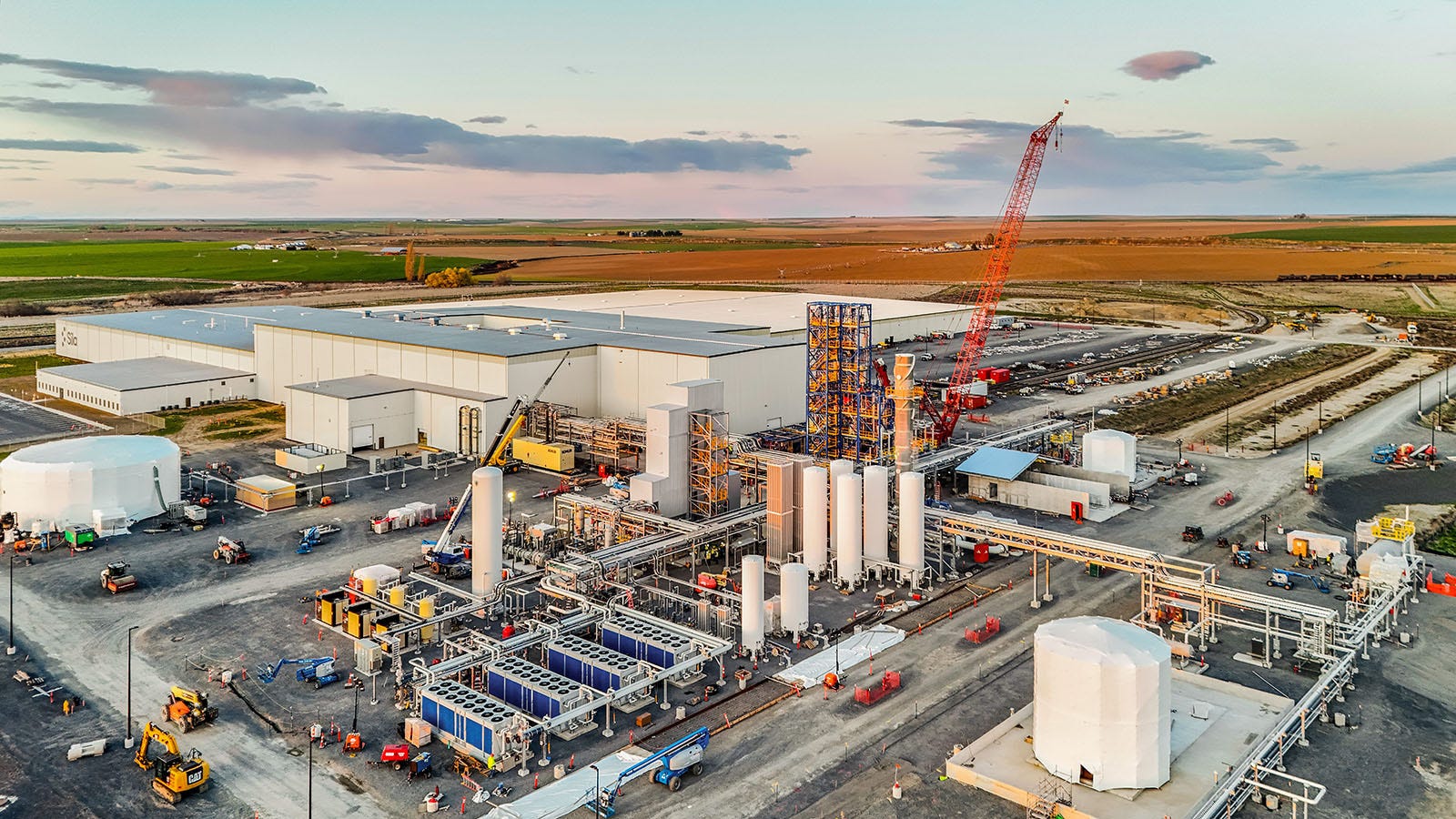
BLUF: A Shanghai fund with Chinese military-civil fusion ties sits on the cap table of a US next-generation battery materials company that received over $100 million in federal grants and is backed by major defense investors such as In-Q-Tel and 8VC. That fund facilitated US-to-PRC technology transfer in the past. Nobody in Washington noticed.
On July 21, 2026, Sila Nanotechnologies, Inc. (”Sila”) announced $300 million in new funding under a headline invoking “America’s Technology Sovereignty.” The release named the People’s Republic of China as a national security threat while omitting that a Shanghai venture firm participated in the round.
Is Sila taking Chinese money? Does it matter?
Yes, and yes. Sila received $100 million in taxpayer funds via a Department of Energy grant and additional investment from In-Q-Tel. At the same time, one of Sila’s investors is a Shanghai fund that has historically transferred US technology to the PRC, has limited partners heavily involved in Chinese military-civil fusion, and works with entities like the China Internet Investment Fund. This creates an opportunity for Beijing. Why should the American public tolerate this?
Sila is one visible instance of a disease that runs throughout America’s strategic sectors. The US government must put an end to these types of investments or further risk losing its technological edge to the adversary.
What We Know
Sila manufactures cutting-edge battery technology with defense applications. Its July 2026 release states the funding will scale silicon-carbon anode production for “space, defense, AI, electronics, and EVs.”
Sila received $100 million in federal grant money. Awarded by DOE in October 2022 under the Bipartisan Infrastructure Law.
In-Q-Tel is an investor. It invested in 2019 and is named in Sila’s July 2026 press release.
Chengwei Capital (成为资本) is an investor. The Shanghai firm first invested in Sila in 2019, the same time as In-Q-Tel, and participated in the Series H that closed in July 2026.
Sila dropped mentions of Chengwei in its July 2026 press release on strengthening America’s technology sovereignty.
Chengwei’s founder is a public supporter of the Chinese Communist Party and has a track record in technology transfer.
What Chengwei Is
Chengwei Capital (成为资本) is headquartered in Shanghai. It has deployed over $2 billion across more than 150 Chinese technology companies with a focus on Chinese strategic industry “self-reliance” priorities. Major examples include StarFive (赛昉科技) in RISC-V processors, Sunny Optical (舜宇光学) in optics, XAG (极飞科技) in agricultural drones, and WM Motor (威马汽车) in electric vehicles. Its founder and managing partner is Eric Li (李世默), who founded the pro-Chinese Communist Party news site Guancha.cn (观察者网) and is among the CCP’s most vocal public advocates.
Li and Chengwei have a documented track record of moving American capability to the PRC. In 2018 Chengwei invested both in SiFive, the US company founded by the Berkeley team that invented RISC-V (an open-source chip architecture), and in StarFive, the Shanghai firm stood up as SiFive’s China division. One of StarFive’s seed investors explained the move in 2020. SiFive set up in China because decoupling would lock Intel and Arm out of the market. Today StarFive sells itself as the indigenous alternative to American chip technology, funded by the state-backed China Internet Investment Fund and other state-owned investors. Chengwei facilitated this tech transfer and a US company’s China division became a Chinese national champion.
It is worth noting that aside from Sila, Chengwei Capital and affiliated investors are currently invested in US frontier medical technology with companies including TandemAI and Tesseract Medicines.
Chengwei’s Partners
Chengwei’s limited partners include Chinese military-civil fusion funds along with US pension funds and university endowments.
The most notable mil-civ fusion entity associated with Chengwei is Zhangjiang Hi-Tech Park Development Co., Ltd.(上海张江高科技园区开发股份有限公司), which operates Shanghai’s principal technology zone in Pudong. In addition to supporting CCP strategic goals such as Made in China 2025, Zhangjiang hosts the National 863 Information Security Industrialization (Eastern) Base. The 863 Program (863计划) is China’s state dual-use technology program, and US agencies state that it provides funding and guidance for efforts to clandestinely acquire US technology.
Major companies jointly supported by Zhangjiang and Chengwei include Shanghai Lingrui Zhixin Computing Technology (灵睿智芯), a strategic Chinese CPU manufacturer that is part of a state-sponsored effort to set international standards and capture the stack for physical AI. Other co-investors include 中科创星 (CAS Star) and 壁仞科技 (Biren Technology), the latter is on the US Entity List.
Additional Chinese venture funds that co-invest with Chengwei include Gordian Ventures, Qiming Venture Partners, and V-Capital, which invests in US robotics firms as well as Chinese military companies.
Chengwei also manages capital for the Yale University Endowment, the University of Michigan Endowment, and the Employees’ Retirement Plan of Duke University. American endowment money and the retirement savings of American university employees are therefore committed to a Shanghai fund that co-invests alongside Entity-Listed companies and state military-civil fusion vehicles, and whose portfolio is partially built around displacing American technology. American institutions are unwittingly supporting this capability transfer.
Back to Sila
We are not suggesting there was a US intent to bring Chinese state-linked capital into a federally funded strategic company. The more likely explanation is that neither Sila nor its other investors knew, and the investor exploited this gap.
The problem is that this process constantly repeats itself. A US company is building a technology the US needs, with federal money and US venture backing, and it does not appear to know who its investors answer to.
Sila and In-Q-Tel should do the following:
Identify which Chengwei vehicle holds the Sila position, and its limited partners.
Determine what information rights, board rights, and pro-rata rights that position carries.
Determine whether Chengwei has received technical, manufacturing, or roadmap reporting at any point since 2019.
Publish the answers.
Sila spent a press release warning about Chinese leverage over critical supply chains and constantly refers to its securing American battery manufacturing. If this is truly the case, it should not count a Chinese investor with military-civil fusion ties among its investors.
What To Do About It
Disclosure as a condition of award. Any company receiving federal grants, federal contracts, or In-Q-Tel investment in a strategic sector should publicly disclose its full cap table to the awarding agency, and the agency should have authority to refuse the award or require a divestment.
Fix the CFIUS threshold. Mandatory filing for critical-technology companies should reach passive minority positions held by funds domiciled in countries of concern, or led by nationals who carry state-mandated national security obligations, where the target holds federal awards or supplies defense end users.
Penalties for companies that receive funding from adversaries. If a US company works in a critical technology sector, takes US taxpayer money, and publicly states it is shoring up US national security, it should not be permitted to take capital from investors domiciled in a country of concern or otherwise subject to that state's legal authority to compel disclosure. Companies that do should be held responsible.
The US does not need Chinese investors in any company associated with critical technologies or the US defense industrial base. The individuals aiding technology transfers should be prosecuted to the fullest extent of the law.
Sourced from Vermilion Data. Contact us to request a source packet. This was written by a human with assistance from AI for review.
Note: Regulators should identify Qiming Venture Partners’ US limited partners and Chinese investments. US LPs include, but are not limited to, the Citigroup Pension Plan, the Municipal Fire & Police Retirement System of Iowa, the Princeton University Investment Company, the Massachusetts Institute of Technology Basic Retirement Plan, the Employees’ Retirement Plan of Duke University, the University of Texas/Texas A&M Investment Management Company, and the New York University Endowment.
There is no reason why a firm that invests Chinese state assets and co-invests with Chinese military companies should be a steward of US pension funds.