
A SenseTime Team Is Buying America's Frontier Tech
US regulators are asleep at the wheel

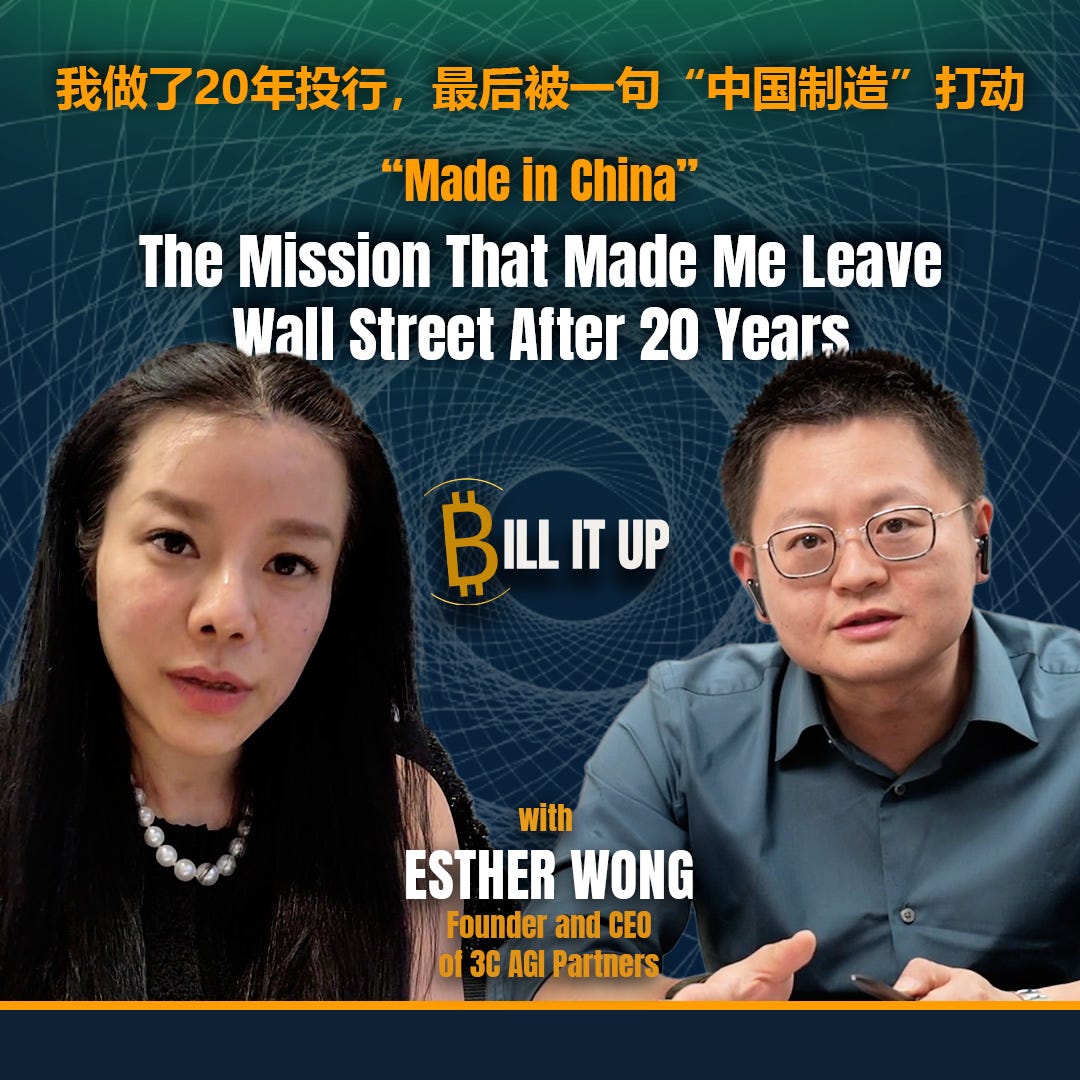
The people who raised the money for a three-times blacklisted Chinese AI company are now investors in American frontier technology companies.
3C AGI Partners (”3C”) is a Hong Kong fund that buys into the most sensitive hardware companies in the United States: wafer-scale AI chips, optical interconnect, brain-computer interfaces, orbital data centers, and fusion. What it does not advertise is that its investment team was assembled, in large part, out of SenseTime (商汤科技), a company the United States placed on the Commerce Entity List in 2019, on Treasury’s investment blacklist in 2021, and on the Pentagon’s 1260H list in 2025. In addition, the fund’s backer is a family office affiliated with that same blacklisted company’s effort to build AI data centers in Hong Kong.
That team has taken positions in at least eight American frontier-technology companies, several of them funded by DARPA, In-Q-Tel, the Department of Energy, and Lockheed Martin. And across three years of doing it, the fund has drawn no public scrutiny. In Chinese-language media it is celebrated as the Chinese fund that broke into American AI.
US policy has spent years building walls to stop American capital and technology from flowing to Chinese AI and chip firms. Why are these people still allowed to invest in US advanced technology companies?
What We Know
3C is a Hong Kong venture firm launched in December 2023. It is co-managed by VMS Group and Esther Wong (王康曼).
Wong was a Managing Director at SenseTime (商汤科技) from 2018 to 2025. According to interviews, she built the company’s strategic-investment and capital-markets teams and raised billions.
SenseTime was initially sanctioned by the US for building facial recognition tools designed to identify ethnic Uyghurs based on features like clothing, beards, and glasses. Wong was an executive at SenseTime during this time.
According to the fund’s own disclosures, its portfolio spans eight US and allied frontier-tech companies: These include Cerebras Systems, Groq, Tenstorrent, Ayar Labs, Type One Energy, Synchron, Starcloud and Cortical Labs. At least four have direct US government and defense investment.
VMS Group is affiliated with SenseTime’s effort to build AI data centers in Hong Kong. VMS declines to identify its investors.
The Team
Esther Wong (王康曼) spent 2018 to 2025 as a managing director at SenseTime (during the time it was thrice blacklisted), running its strategic investment and capital markets. When she left to build 3C, she brought the team with her. The fund’s managing partner, Michael Chan, ran SenseTime’s capital markets and set up its joint venture with Saudi Arabia’s Public Investment Fund. Two more of 3C’s investment staff came from SenseTime.
This does not stop at SenseTime. 3C’s deep-technology partner, Bruce Wang, previously backed YMTC (长江存储), the state-owned memory maker that is Entity-Listed and Pentagon-designated.
A coherent group whose expertise was formed inside Entity-Listed Chinese firms is now an investor in American frontier tech.
The Bets
Each of 3C’s investments sits at the center of US export-control and investment-screening policy.
Cerebras Systems and Groq are the two most prominent challengers to Nvidia in AI silicon. Cerebras reached its 2026 Nasdaq listing only after a CFIUS review of a different foreign investor held up its IPO for more than a year. Tenstorrent is an AI-chip company. Ayar Labs is the optical-interconnect company spun out of a DARPA program, with Lockheed Martin Ventures as an investor. Type One Energy is a fusion developer selected for the Department of Energy’s pilot program and it works directly with Oak Ridge National Laboratory. Synchron builds brain-computer interfaces and trains AI models on human brain data. Starcloud puts advanced Nvidia GPUs in orbit.
For at least two of these companies, both 3C and In-Q-Tel as co-investors.
The Loophole
Starcloud, responding to an inquiry on its investor, states that 3C invests through a Cayman-domiciled fund, that its ultimate beneficial owner is Canadian, and that none of its limited partners are PRC state or military entities. Starcloud also states that 3C holds a stake below 5%, with no board seat, no observer seat, and no information rights. It adds that 3C has cleared CFIUS on other transactions without an adverse finding.
Starcloud aside, any US company that treats any of the above as a good reason for why it is acceptable to take 3C’s money is precisely the problem. Yes, a passive, sub-5% position with no rights is, in most cases, a non-covered transaction that CFIUS has no mandatory jurisdiction to examine. However, when the rules will not draw the line, the company taking the money is the only one who can. US companies must take responsibility for their investors.
An investor whose capital and personnel were formed inside a thrice-blacklisted Chinese company can build exactly this structure: an offshore shell, a clean-jurisdiction owner, minority stakes kept under the threshold, no formal control rights, and a portfolio of the most sensitive companies in the country.
We are not alleging that Esther Wong or her partners intend to move technology to China, or that they control any of the companies mentioned above. We are saying that the threshold for what is used to decide which investments earn a second look is set too high to catch a team like this.
Questions worth asking:
Why should a 5% materiality threshold decide whether a China-linked investor in an export-controlled company receives a second look?
Why does “passive, no board seat, no information rights” end the line of questioning when the risk from a team like this is proximity?
Why is the provenance of an investment team, assembled from inside a company that has facilitated some of the modern world’s most vile human rights abuses, not itself a trigger for review?
Why is China-linked capital in US frontier tech screened so lightly?
What To Do About It
Screen managers, not just domiciles. A Cayman fund with a Canadian beneficial owner can still be run by an investment team assembled inside a blacklisted Chinese company. A review that stops at the fund domicile or the passport of the owner reviews nothing. The provenance of the people deploying the capital is the fact that matters, and it is the fact the current process is built to ignore. Individuals who held senior roles at companies during the time they were sanctioned should incur the same restrictions that are already levied against members of the CCP and PLA.
Lower the trigger. The 5% threshold and formal control rights was built for a bygone era. A team with deep ties to China’s designated national champions is sitting close to the design of American chips, models, and orbital compute, whatever its ownership percentage. For export-controlled sectors, the threshold should fall well below 5%, and any position taken by China-based or China-linked (including Hong Kong and Macau) capital should be reviewable regardless of size or the nature of the offshore structure around it.
These types of funds should not be allowed to invest in the United States. CFIUS must act.
Sourced from Vermilion Data. This was written by a human with assistance from AI for review.
Note: In correspondence ahead of publication, Starcloud, a 3C portfolio company named here, stated that 3C invests through a Cayman Islands fund whose ultimate beneficial owner is Canadian; that none of 3C’s limited partners are Chinese state or military entities or domiciled in OFAC-sanctioned jurisdictions; that 3C maintains KYC/AML, and sanctions-screening policies; that 3C’s stake in Starcloud is below 5% with no board seat, observer seat, or information rights; and that 3C has been through prior CFIUS reviews without an adverse determination, divestment order, or mitigation agreement. Starcloud disputes any characterization of 3C as “adversary capital.” This piece makes no such claim. It does not allege that 3C is controlled by, affiliated with, or acting on behalf of the PRC government or any Chinese state entity, or that Starcloud is funded by such capital. We are simply highlighting concerns around the pedigree of 3C’s management team and the adequacy of US investment-screening rules.