
10 Capabilities That Will Win the War and 1 That Will Lose It (Part 1)
Who is Producing Shit and Who is Producing Gold

Any future conflict with the PRC will largely be decided by the leadership and capabilities of a coalition Combined Joint Task Force (CJTF), likely including at least the US, Taiwan, and Japan. Today, we focus on this future CJTF’s capability to deny the PLA freedom of maneuver across the Taiwan Strait and the broader Western Pacific, and its ability to roll back PLA forces if necessary. That means sinking ships, destroying aircraft, degrading command and control, and attriting the PLA within and beyond the borders of the PRC.
A CJTF does not need to match the PLA platform-for-platform. It needs to field the right men, the right weapons, on the right platforms, integrated into kill chains that move faster than the PLA's operational plan can adapt. What follows is an overview of the critical systems that will enable a coalition CJTF to prevent Beijing from achieving its political objectives through force (and one that will hinder it). These weapons systems span every service and every domain.
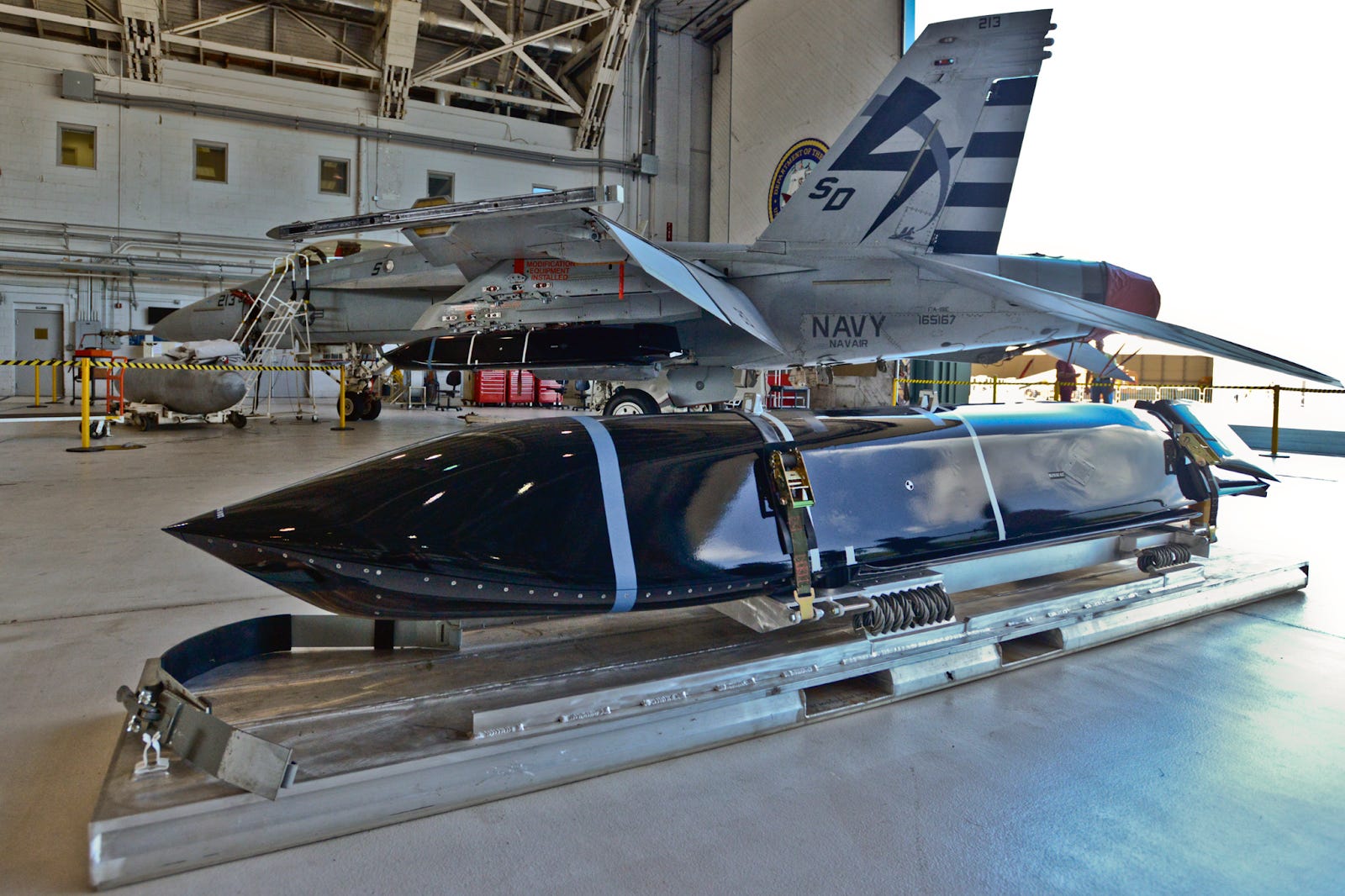
LRASM - Lockheed
The AGM-158C LRASM (A = air-launched, G =surface-attack, M = guided missile, Long Range Anti-Ship Missile) is the US military’s primary air-launched anti-ship cruise missile. Stealthy air-launched cruise missiles are critical for overwhelming PLA surface vessels, including platforms like the Type 055 Renhai CCG cruiser, Type 052D DDG Luyang destroyer, and amphibious lift platforms like the Type 076 Yulan LHD, Type 075 Yushen LHD, and Type 071 Yuzhao LPD.
The advantage of the LRASM is that it can be fired from extremely long range, preserving American air assets, and that it is more difficult to detect than a standard cruise missile.
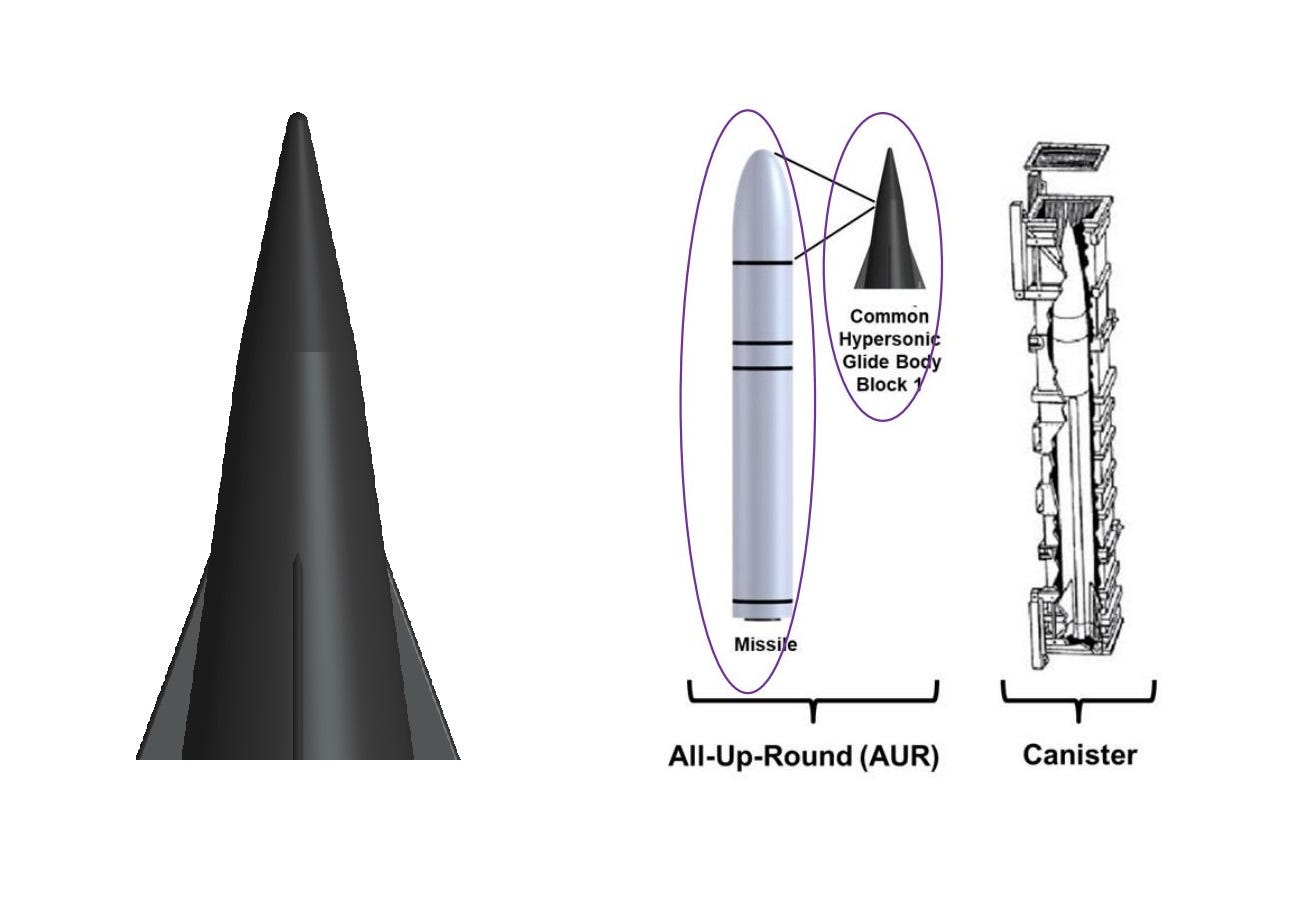
All Up Round - RTX
US tactical hypersonic weapons across the Army and Navy are likely to rely on the All Up Round (AUR), including the Army’s Dark Eagle LRHW (Long Range Hypersonic Weapon and the Navy’s sea-based CPS (conventional prompt strike). Ideally, the AUR will deliver a common hypersonic weapon that can be tweaked by the various services, saving time and money.
AUR-based weapons will be far more capable of penetrating the PLA’s air defense to hit critical platforms, C2 targets, and critical radars/sensors.
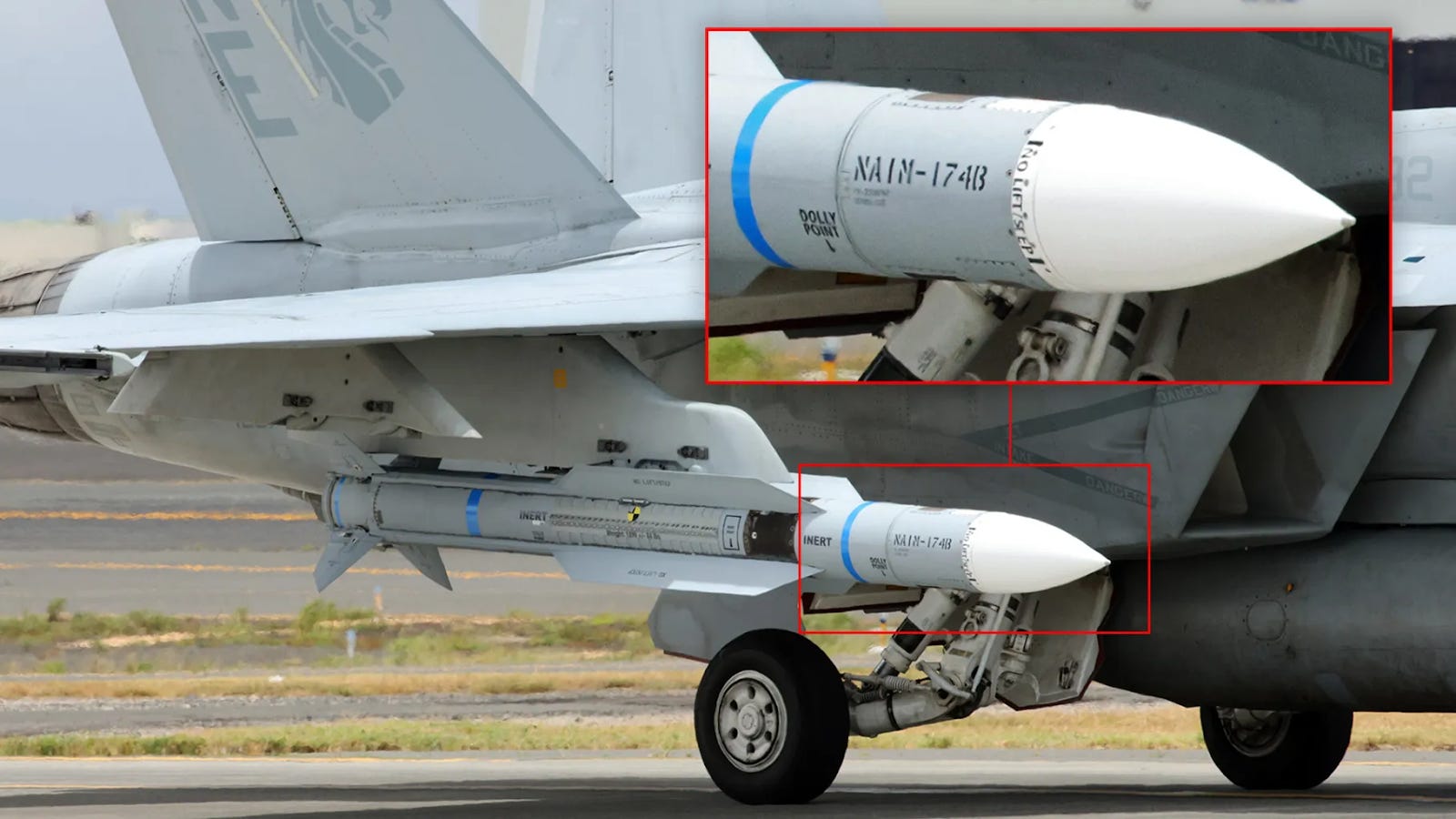
AIM-174B Gunslinger - RTX
This missile is critical to securing the American edge in air-to-air combat. The PLA fields the PiLi (thunderbolt) family of missiles, which, until the AIM-174B Gunslinger (A = air-launched, I = intercept-aerial, G = guided missile), have seriously outranged comparable US air-to-air missiles (AAMs). The Gunslinger will allow US fighter aircraft to make maximal use of their sophisticated onboard sensors and destroy enemy aircraft at ranges comparable to or longer than those of PLA Air Force platforms firing PiLi missiles.
JASSM-ER - Lockheed
The AGM-158B JASSM-ER (Joint Air-to-Surface Standoff Missile, Extended Range) is the workhorse standoff cruise missile for US air power. With a range exceeding 500 nm, it allows air platforms to strike heavily defended targets from outside PLA threat rings. Like the LRASM, the JASSM-ER is a stealthy missile that uses terrain-following navigation and an imaging infrared seeker for terminal guidance.
Bombers can deliver large salvos against PLARF missile sites, PLA logistics hubs, airfields, and SAM batteries, etc without penetrating contested airspace. This allows the US to attrit PLA air defense networks and C2 infrastructure in the opening phases of a conflict while preserving aircraft for follow-on strikes.
Lockheed is also developing the JASSM-XR (eXtreme Range), which extends range beyond 1,000 nm, further expanding the standoff envelope and complicating PLA targeting of US air platforms.
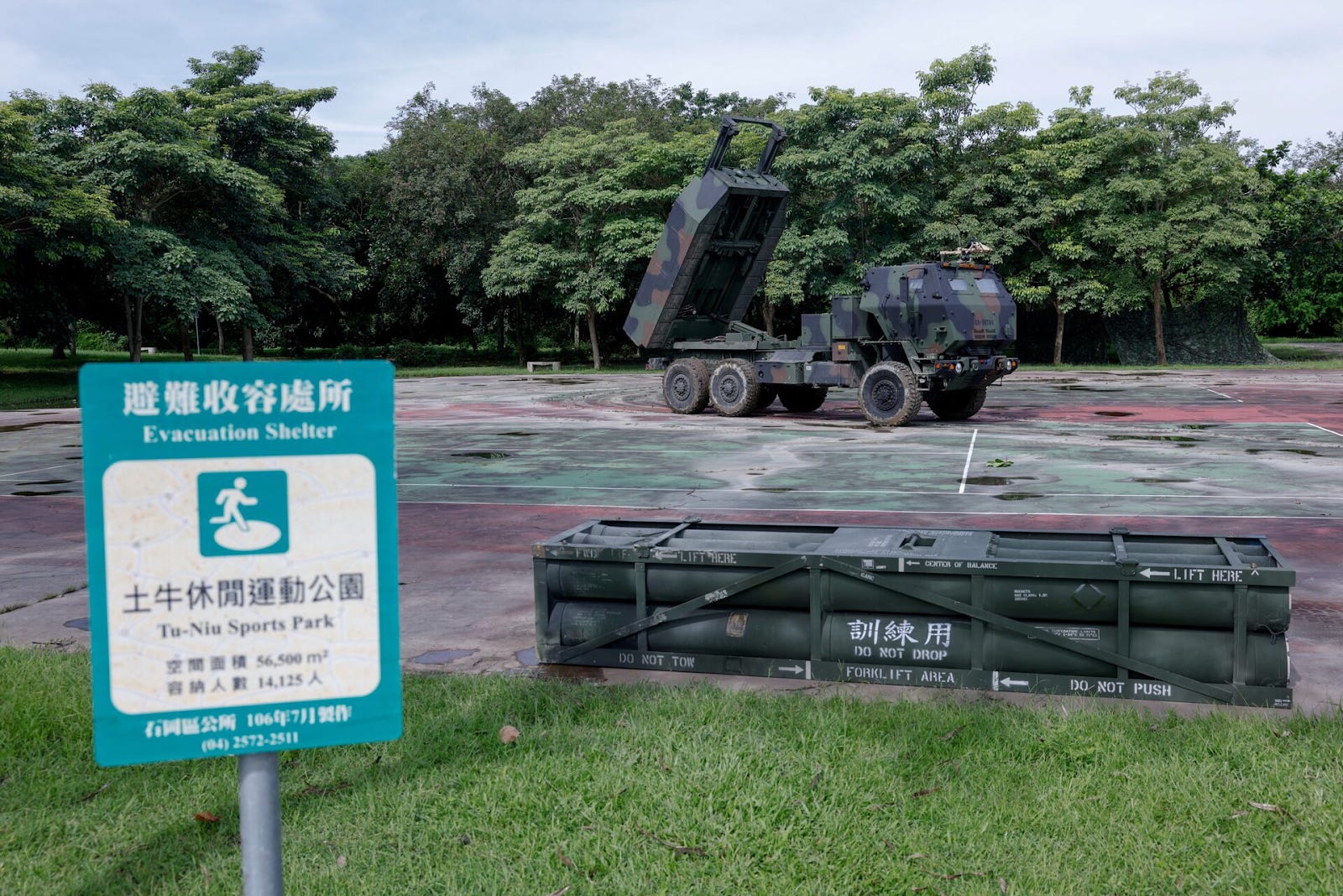
HIMARS - Lockheed
The High Mobility Artillery Rocket System (HIMARS) is central to the US ground combat element’s ability to deny the PLA freedom of movement throughout the first island chain. The system provides the US Marine Corps MLR and US Army MDTF with an organic long-range precision fires capability. Additionally, Taiwan will possess multiple HIMARS systems and will be able to use ATACMS to strike ground targets within the PRC.
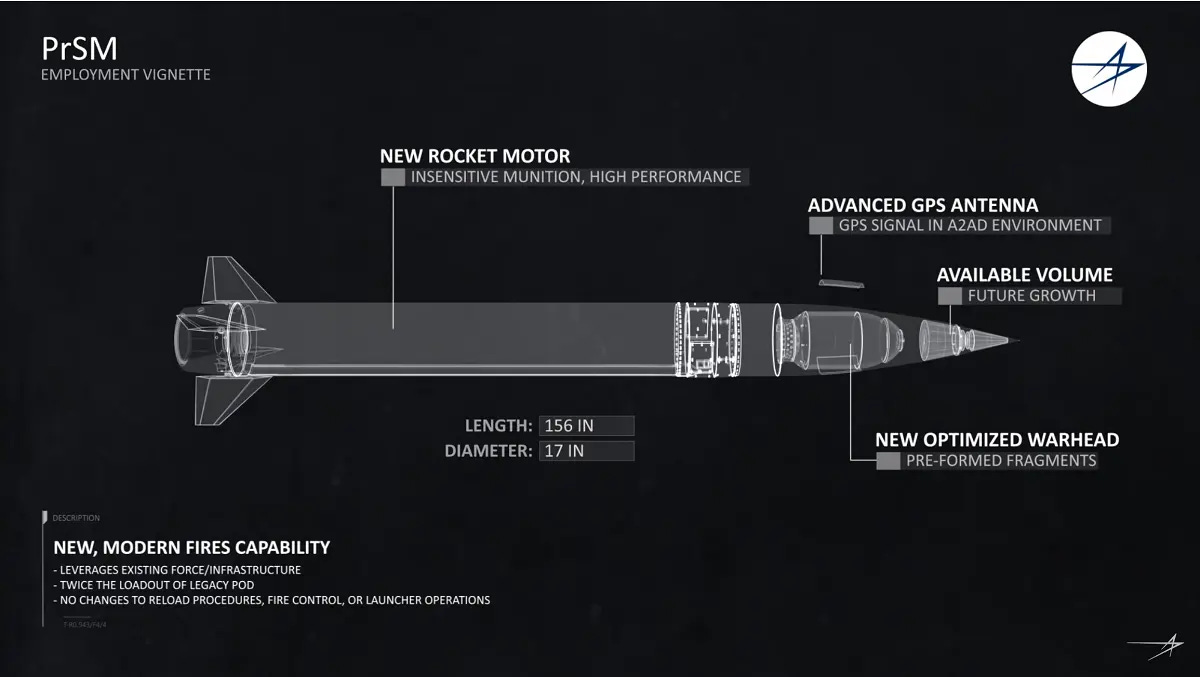
PrSM - Lockheed
The PrSM (Precision Strike Missile) is replacing the ATACMS in the US inventory. A PrSM ordinance pod will carry two missiles instead of a single ATACMS. Additionally, incremental enhancements to the PrSm will likely enable it to engage targets beyond 500km, hit moving targets, hit fleeting targets, and, most importantly, hit moving surface ships.
The newly reorganized Army HIMARS battalion has about 27 launchers, while a USMC battalion has about 24. This means an Army battalion would generate a decent-sized salvo of 54 PrSM shots, enough to overwhelm the edges of a PLA Navy flotilla, depending on how the strike is conducted.
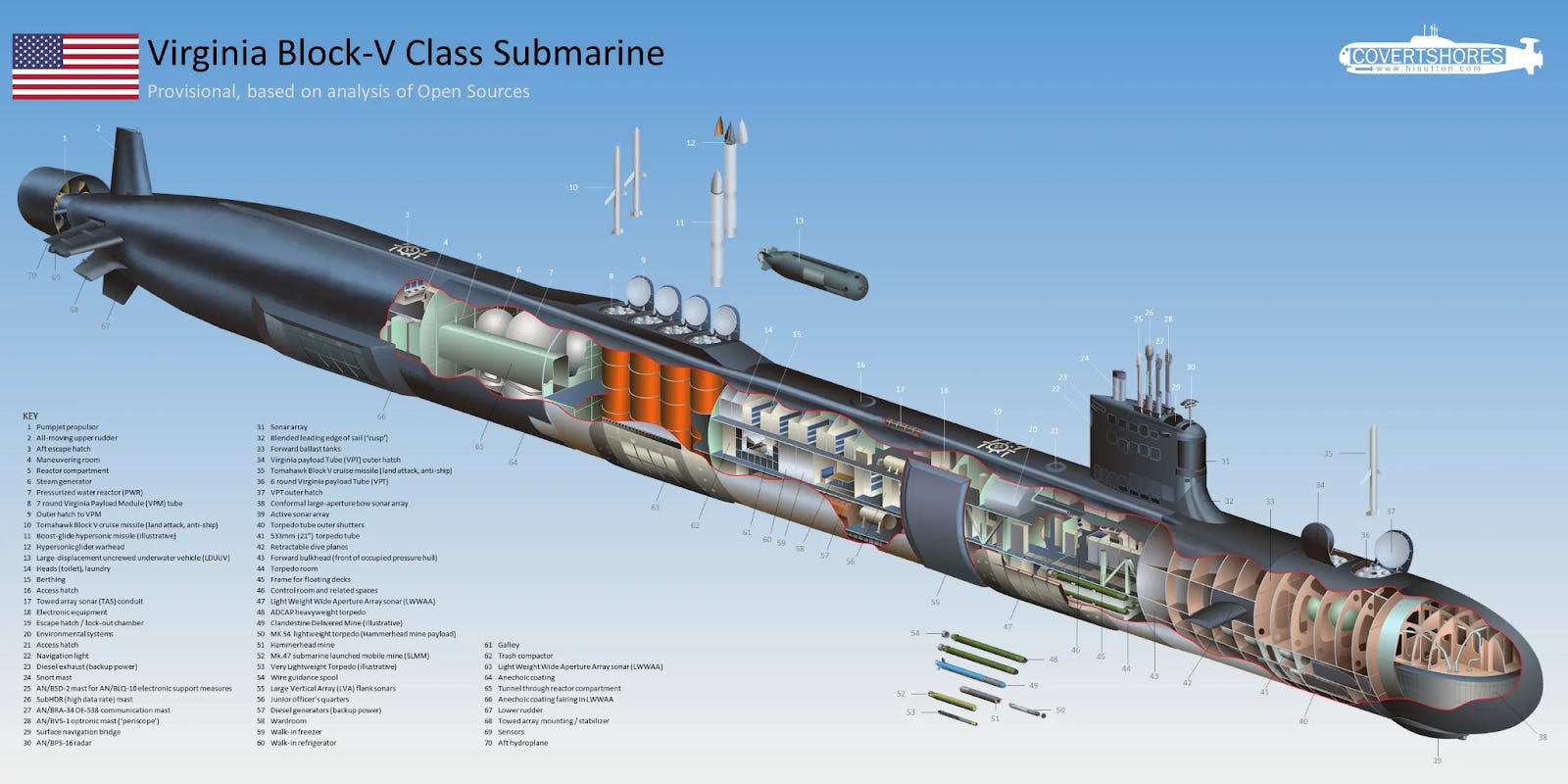
Virginia-class Sub - General Dynamics Electric Boat & HII
The Virginia-class is the most deadly nuclear-powered attack submarine (SSN) on the planet and provides the US with a serious kinetic asymmetric advantage over the PLA in a Taiwan contingency. Virginia-class boats are multi-mission platforms with anti-submarine warfare (ASW), anti-surface warfare, land-attack, ISR, and SOF support capabilities.
In a Taiwan scenario, it is likely that the PLA will attempt to use a naval blockade to isolate Taiwan prior to/ concurrent with an amphibious assault. The Virginia-class can exploit significant gaps in PLAN ASW capability to tear through PLAN subs and PLAN surface vessels, degrade the PLAN’s ability to protect amphibious lift, and either strike the lift itself or open up additional gaps for the Combined Joint Force to chew away at vulnerable Red lift. If the conflict expands past local war, these boats can also be used to sink merchant vessels transiting to Mainland ports.
In addition to this, the Block V features the Virginia Payload Module (VPM), which raises the VLS count to 40 Tomahawks per boat. This increased land-attack capability shores up the US Navy’s ability to strike PLA landing sites on Taiwan, mustering locations on Mainland China, and conduct other counter-force strikes on Mainland China. The VPM might also enable the Virginia-class to employ Conventional Prompt Strike.
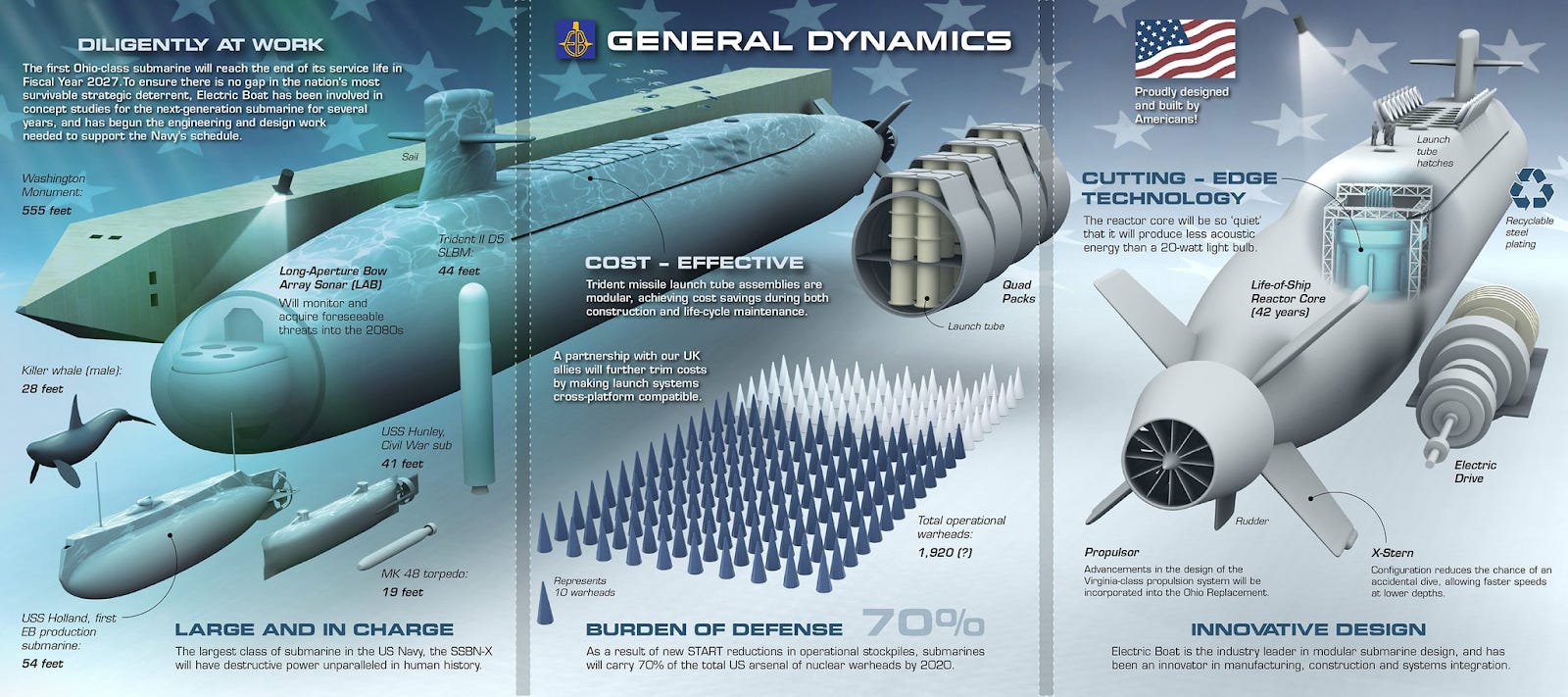
Columbia-class Sub - General Dynamics Electric Boat & HII
The Columbia-class is the replacement for the aging Ohio-class ballistic missile subs (SSBNs) that currently function as the cornerstone of US sea-based nuclear deterrence. This program, also the victim of ongoing US Navy shipbuilding issues, will shore up US nuclear deterrence until at least the 2080s, with the expectation that the first Columbia-class boat will be commissioned in 2031.
If short-term deterrence succeeds and a Taiwan contingency is pushed into the 2030s, the Columbia-class and the Ohio-class will both serve as a backstop against increased PLA escalation. These boats ensure that the US retains a credible first & second-strike capability that Beijing cannot neutralize, which will impact PLA planning.
Some of the Columbia class will likely also be converted to Tomahawk missile carriers, like three of their Ohio-class ancestors. These subs give the combatant commander a massive 150+ Tomahawk saturation strike deliverable anywhere along the first island chain or the Chinese seaboard.
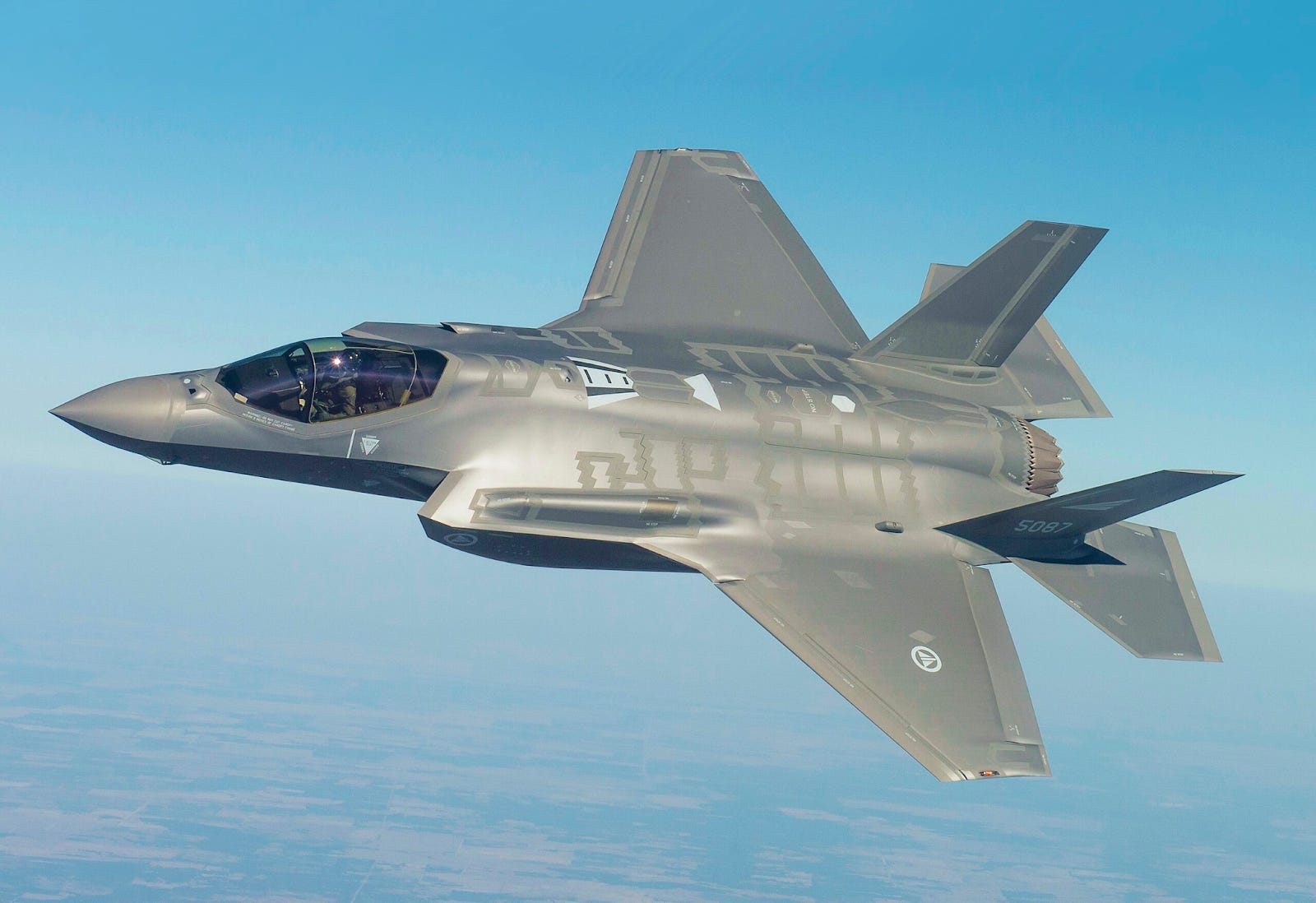
F-35 - Lockheed, Northrop Grumman, BAE, and Pratt & Whitney (RTX)
The F-35 is the most widely fielded fifth-generation fighter in the world and serves as the backbone of US coalition airpower in the Indo-Pacific. The aircraft’s sensor fusion architecture combines radar, infrared, synthetic aperture radar, and electronic warfare inputs and outputs into a single integrated picture, allowing the pilot to see the battlespace rather than piece it together from disparate systems. This makes the F-35 less of a traditional fighter and more of a flying C2 node that can detect, track, target, and share data with the Combined Joint Task Force in real time.
In a Taiwan scenario, the F-35’s value in analyzing and penetrating contested airspace to conduct ISR, suppress PLA integrated air defense systems, and strike landing forces and amphibious lift is high. More importantly, the F-35 functions as an elevated sensor that feeds targeting data directly into the Combined Joint Fires Architecture.
An F-35 operating over the FIC can cue Navy surface combatants for SM-6 shots, pass coordinates to Army MDTF or Marine MLR batteries for PrSM strikes, and designate targets for standoff munitions from bombers loitering outside the threat ring. The F-35 is a sensor that will be able to feed nearly any shooter.
US, Japanese, Australian, and South Korean F-35 fleets (eventually 300+ aircraft permanently based in the Indo-Pacific) create a sensor network that complicates PLA planning at every level.
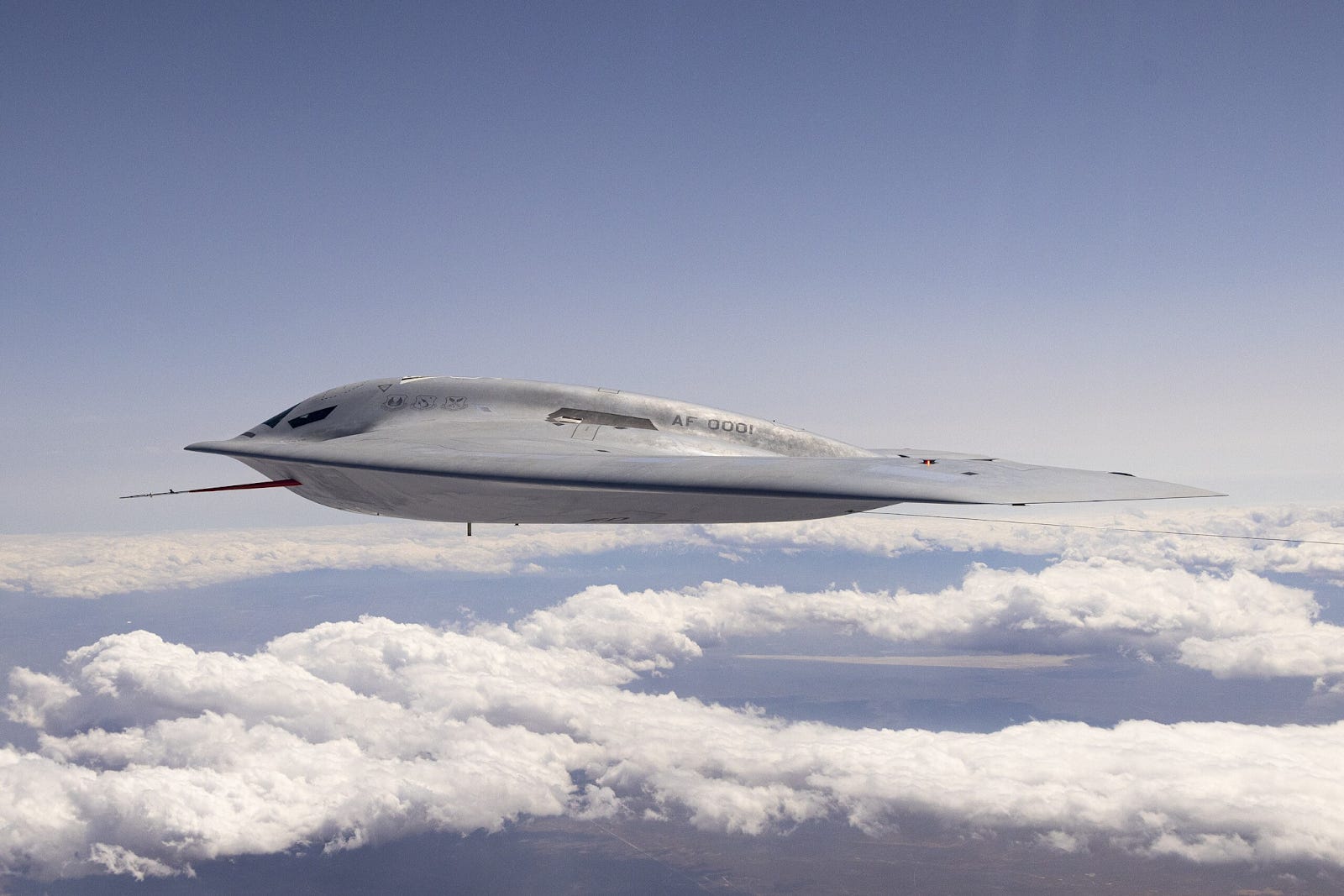
B-21 - Northrop Grumman, BAE, Collins (RTX), GKN Aerospace, Janicki Industries, Spirit AeroSystems, Pratt & Whitney (RTX)
The B-21 Raider is the first bomber designed from the ground up for a conflict with the PRC. It is a dual-capable (nuclear and conventional) penetrating-strike platform that can deliver munitions deep into contested airspace.
The B-21 can penetrate PLA A2/AD and IADS (integrated air defense system) networks to strike hardened and buried targets on Mainland China, including PLARF missile bases, C2, and logistics nodes that standoff weapons cannot reliably destroy.
It can also conduct maritime strikes against PLAN surface action groups and amphibious lift using direct-attack munitions such as Small Diameter Bombs, LRASM, and JASSM-ER. Similar to the F-35, the B-21 Raider serves as an airborne sensor that facilitates combined joint strikes.
One That Will Lose It
The State Department
The US will not lose a war against the PLA. It may, however, suffer unnecessary casualties because the State Department has spent decades building a bureaucracy optimized for cocktail parties while the institutional spine required for action in the Indo-Pacific has atrophied.
Access, Basing, and Overflight (ABO)
Every capability listed above is worthless without access to allied and partner territory. HIMARS cannot hit amphib lift in the Taiwan strait from Guam. Subs need ports. F-35s need fuel. The joint force’s ability to fight and win in the Indo-Pacific depends on ABO agreements that the State Department is responsible for delivering. State is not delivering.
DoW operators who actually understand what the joint force needs are hitting a roadblock at State when trying to translate operational requirements into diplomatic asks. The translation is butchered every time. Requirements get watered down, deprioritized, or sacrificed on the altar of whatever policy fad is pushed that week/ whatever strange political position State happens to be pushing at the moment.
This is institutional malpractice and a strategic vulnerability the CCP is actively exploiting.
The AIT Fiefdom
The American Institute in Taiwan is what happens when an organization is allowed to operate without adult supervision for decades. AIT has become a fiefdom staffed by FSOs who treat Taiwan policy as their personal property and resist any outside interference with the zealotry of medieval landowners.
The result is an institution that has completely lost the plot. While the PLA conducts increasingly aggressive exercises around Taiwan, AIT has been busy promoting LGBTQ+ rights in the most progressive country in Asia. Thankfully, the current administration is setting this straight. Taiwan does not need lectures from American diplomats on social policy. It needs weapons. It needs training. It needs combined integrated planning for the defense of its homeland.
AIT should act as a warfighting combat multiplier. Every FSO assigned there should wake up asking two questions: what can I do today to advance US interests, and how can I make Taiwan harder to invade?
Instead, AIT is a resume-building waystation for FSOs who want a “challenging” posting without any actual challenge. They host cultural events and cocktail parties, and rotate out before anything they did or failed to do has consequences.
The FAO Problem
The Foreign Area Officer (FAO) program is supposed to produce warrior-diplomats/ regional experts who can operate at the seam between military power and politics. Some fulfill this mission, but they are in the minority.
The selection process is broken, the culture is broken, and the quality of personnel is abysmal. FAOs increasingly reflect their FSO counterparts by prioritizing career management and being risk-averse. By and large, these are not the people you want representing American interests against a rising authoritarian power. They have been tainted by generations of highly politicized leadership, lack a killer instinct, and have no strategic vision. They have MAs from Georgetown and an encyclopedic knowledge of which embassy & think tank events have the best booze.
Experts Who Aren’t
The Indo-Pacific policy community in Washington is infested with people who have confused proximity to power with actual expertise. These are your think tank fellows who haven’t been in-country since the Obama administration (reminiscing about the Hu Jintao era), former FSOs who parlayed a single tour into a career of grift, and academics who have built entire reputations on theories that will never survive contact with reality and will likely get Americans killed. These are the “experts” who brief the National Security Council, testify before Congress, and write op-eds that shape elite opinion.
These people do not understand strategy. They understand career management. They know how to position themselves for the next administration, how to cultivate relationships with journalists, and how to say things that sound profound without ever committing to an actual position. When they’re wrong, and they have been catastrophically wrong about China for thirty years, there are no consequences. On the contrary, they pick up cushy positions at SAIS.
These institutions have an accountability problem. The same people who got everything wrong are still in positions of influence. They have faced no professional consequences for being wrong about the most consequential geopolitical development of the century. Until that changes, the “expert” community will continue producing analysis that is completely disconnected from the world as it actually exists.
The State Department, the FAO community, and the broader policy establishment are not supporting elements. They are critical vulnerabilities. And until that changes, the US will not be as ready for a war with the CCP as it should be.